






Learn about turtles and rabbits.
Popularity: 1% [?]
We have Art Aguilar installing the new RockShox KAGE rear shock for the Airborne Taka. It was super windy that day, so please forgive us in advance for the wind noise.
Popularity: 1% [?]
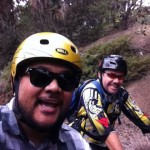
In the unfortunate event that you are forced to protect yourself and your property from trail thugs, knowing how to do so properly can literally mean the difference of you going out for burritos after your ride or being taken away on a stretcher. Below we will demonstrate some basic Trail Thug Fighting Techniques…or TTFT. I will be playing the role of a Trail Thug since Thugs are known to wear flannel shirts and argyle socks. My buddy, Ben will play the role of Mr. Mountain Biking Victim.
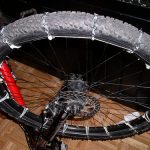
1. Punch to the FACE (with the rear tire) This technique can be easily executed if you have some sort of upper body strength. A quick blow to the Thug’s face can either knock him out or at least give you enough time to get away and get some rocks or a stick to finish him off.

2.Nut Cracker. After applying the rear wheel to the face, your next move is to shove your front wheel into the Thug’s nuts. There’s really not much else to say, a shot to the nuts will stop anyone!

3. Say Hello to my Lil’ Friend. After the nut shot, the Thug will fall down to the ground, and this is when you show him how heavy your bike is by repeatedly hitting him with it. This is also a great time to repeatedly say to the Thug, ” You want a piece of me?! Huh Punk?!!! You want a piece of ME!” Doing so will ensure that the Thug knows you now have the upper hand.

4. Anaconda SQUEEZE! This move basically uses the front wheel to choke out the Thug. You only release a little bit of the pressure when he either says, “Uncle” or when he starts gurgling because he can’t breath.

One final tip, if you’re wearing knee/elbow pads, use it to your advantage. While the Thug is down, throw a few elbows, and knees to his ribs. Just remember, you’re wearing pads, so you won’t get hurt! I sure hope you have enjoyed our guide for the TTFT, remember you can do all these things if you simply say, “I was doing it in self-defense.” (you may actually want to consult your lawyer about that.)
Popularity: 2% [?]
As some of you may know, cycling specific wind breakers or winter clothing can cost as much as a $100. The reason being is because for the most part, they do work. But wouldn’t be great if you could get your cold weather riding done with stuff you may already have? If you don’t have it, then I’ll show you what items you can use when the temperature drops.
Mind you for us Southern California riders, anything below 60 degrees is considered cold and when it drops down to 40 degrees, we typically will stay indoors. However, for those of you acclimated to much colder temperatures, this should work for you too!
First up is this Army BDU. It’s 100% cotton so it does a great job in allowing your body to breath while preventing the cold air from hitting your skin. I got this BDU from my brother who is in the Army. But you can get BDUs on the cheap from your local thrift store. What I typically do, is wear some sort of dry fit jersey as a base layer and the coat as an outer. This combination allows me to sweat and but because of the coat, I don’t get the chills. If I feel like I’m starting to heat up, then I’ll just unbutton to allow some air to flow.

Fleece is a great way to keep warm. Here is an example of an affordable fleece sweatshirt. Something like this cost around $20-$30 from Old Navy. Again I’ll wear a polyester base layer to manage my perspiration. My only complaint for this set up is the cold air that can come up the sleeves. This type of fleece isn’t cuffed, so you can either tuck it into your gloves or cuff it before you ride by folding it over.

Finally we have some flannel shirts. I like this set up because for one, they are super cheap. You can get one from Walmart for as cheap as $12! This works the same as the BDU, the cotton fabric allows some breath-ability without letting too much cold air in. This works best with a jersey as your base layer. The best part about this is you don’t have to be so careful with it since it’s cheap and pretty durable.

So there you have it, a few tips on keeping warm in the winter while on a budget. If you have some suggestions on what has worked for you, leave a comment below.
Popularity: 1% [?]
Have you been on the fence about going from your standard triple crankset, to a double? I was. I read the articles, saw all the ads, seen them at the races. Well, I finally made the switch earlier this year on my XC bike. Why go double? Most of us spend a lot of time in the middle ring, dropping down for the steep climbs, and shifting up to the big ring for the long downs. So a double that has a one ring a bit smaller than a normal 32 middle, and one a bit larger sounded good to me. You could go
all out and buy a crank, shifters, derailleurs, cassatte, and chain to go full 2X10. I went the cheaper route. I went with a Sram XX crankset, and ran my existing components.

The XX crank is not the cheapest double out there, but it is one of the lightest. I’ve also used the FSA Comet double. And it can be found for just over $100.

Using a 2 X 10 crank with my 9 speed components worked out fine. I did have to spend sometime dialing in my front derailleur. And dont forget to shorten your chain.
The biggest thing I noticed by going from a standard 22-32-44 triple to a 26-39 double is, I can push a bigger gear than I thought. I was scared the 26 tooth ring paired with the 34 cog in the rear, and 29” wheels whould be to tough on some of the steep climbs. But it wasn’t that bad. And it didn’t take long to get used to. The double also seemed to up shift quicker.

So far I’m happy with the switch I made. With all the options out there, 2X10, 3X9, 2X9, 3X10, even 1X9 or 1X10 it can be a tough choice. So what are you currently running? And if you have tried a double setup, how did you like it?
Popularity: 1% [?]